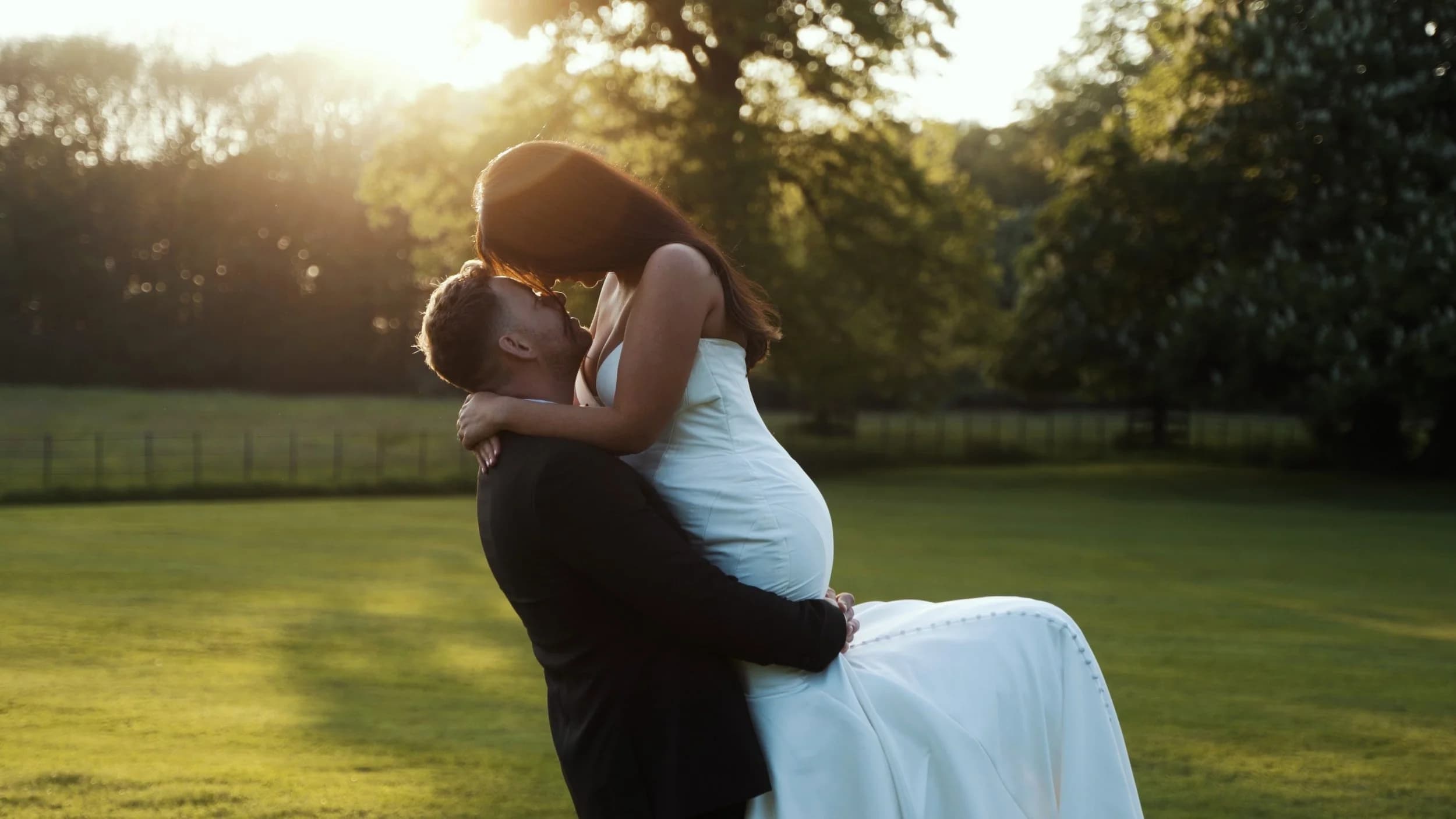
When drone footage works brilliantly
Drone footage is at its best when the venue and surroundings justify it. Country houses with extensive grounds, coastal venues, vineyards, estates with tree-lined avenues, and venues with dramatic architecture all benefit enormously from aerial perspectives. A drone can capture the scale of your venue, the beauty of the landscape, and the setting in a way that ground-based cameras simply cannot.
The most effective drone shots in wedding films are not random aerial footage. They are carefully planned reveals: the camera ascending to show the full grandeur of the venue, a slow pullback during golden hour that captures the couple in the context of the landscape, or a sweeping approach along a tree-lined drive that builds anticipation before revealing the house.
When drone footage is not worth it
Not every wedding benefits from drone coverage. Urban venues with restricted airspace, venues surrounded by tall trees or buildings, indoor-only celebrations, and venues with limited outdoor space often produce disappointing drone footage. In these situations, ground-based filming is usually more effective.
Drone footage is also less valuable when the weather is poor. Grey skies, rain, and strong winds do not produce the kind of cinematic aerial shots that make drone coverage worthwhile. If your wedding is in November and the forecast is overcast, drone footage may add little to your film.
Legal requirements and certifications
In the UK, anyone operating a drone commercially must hold a valid CAA (Civil Aviation Authority) certification. This is not optional — it is a legal requirement. When hiring a videographer who offers drone coverage, always ask to see their CAA qualification. An unqualified operator is not only breaking the law but also voiding their insurance — and yours.
There are also flight restrictions that apply regardless of certification. Drones cannot be flown within 50 metres of people who are not under the operator's control, within 150 metres of congested areas, or above 400 feet. Near airports, military installations, and certain other locations, additional restrictions apply. A professional drone operator will know these rules and plan accordingly.
Venue permissions
Many wedding venues have their own policies regarding drone use. Some venues welcome drones and have designated take-off and landing zones. Others prohibit them entirely due to noise concerns, wildlife, or previous incidents. Some venues require advance notice and specific insurance coverage.
Always confirm with your venue whether drone filming is permitted before booking it. I always contact venues in advance to discuss their drone policy and any restrictions they have. If a venue does not allow drones, there is no point planning aerial coverage — and attempting to fly without permission can result in being asked to stop or even leave the premises.
Weather dependencies
Drone flying is weather-dependent in ways that ground filming is not. High winds, rain, and low cloud can all prevent safe drone operation. Most professional drones can handle moderate wind (up to 20-25 mph), but anything stronger becomes risky. Rain is an absolute no-go — water damage to drones is expensive and dangerous.
This means drone coverage cannot be guaranteed on your wedding day. I always discuss this with couples in advance and have contingency plans. If the weather is unsuitable, I focus on ground-based filming and may suggest a separate drone session on a better day if the venue allows it.
Noise and disruption
Drones are noisy. Even the quietest professional drones produce a buzzing sound that can be heard during outdoor ceremonies, speeches, and quiet moments. This is why I never fly during the ceremony or speeches unless specifically requested and agreed with the venue. The best drone footage is captured during preparations, couple portraits, and when guests are mingling — times when the noise is less intrusive.
I also brief guests when drone footage is being captured, both for safety reasons and to avoid surprises. No one wants to be caught off-guard by a drone hovering overhead while they are having a private conversation.
The best times for drone footage
Based on my experience, the most effective drone shots happen at specific times during the wedding day:
- During preparations — aerial shots of the venue grounds while the bridal party is getting ready.
- Between ceremony and reception — couple portraits from above during golden hour, when the light is most dramatic.
- During the reception — wide shots showing the full venue and guest gathering areas from above.
- At sunset — the most cinematic drone footage often happens during the final hour of daylight, when the landscape is bathed in golden light.
These times are chosen because they offer the best light, the least disruption, and the most visually compelling content.
What to ask your videographer
If you are considering drone footage for your wedding video, here are the questions you should ask your videographer:
- Do you hold a valid CAA drone certification? (They should provide proof.)
- Do you have specific drone insurance for wedding filming?
- Have you filmed at our venue before, and do you know their drone policy?
- What happens if the weather is unsuitable on the day?
- How do you ensure safety and minimise disruption to guests?
- How much drone footage will be included in the final film?
A professional drone operator will answer these questions confidently and provide documentation. If they cannot, consider whether they are the right choice for your wedding.
The cost of drone coverage
Professional drone filming adds to the cost of your wedding video, typically £300-£600 depending on the complexity of the coverage and the travel involved. This includes the operator, the equipment, insurance, post-production editing of drone footage, and the additional time required for safe flying.
While this is a significant addition, the cinematic impact of well-shot drone footage can transform a good wedding film into an extraordinary one. For venues with stunning grounds or dramatic settings, it is often worth the investment.
Final thoughts
Drone footage can add genuine magic to your wedding film, but it is not right for every wedding or every venue. The key is understanding when it works, when it does not, and how to ensure it is done safely and legally.
If your venue has beautiful grounds, dramatic architecture, or stunning surroundings, and you want your wedding film to have genuine cinematic impact, drone coverage is worth considering. Just make sure your videographer is qualified, your venue permits it, and you have realistic expectations about weather and timing.
Next Step
Send your date, venue or town, and a little about what you are planning. I’ll reply myself.
Tell Me Your Date